Title: Five-Axis Fiber Laser Systems Redefining 3D Cutting in Industrial Manufacturing
Abstract
The evolution of laser cutting technology has moved well beyond two-dimensional profiling. As modern fabrication demands increasingly complex geometries, the integration of five-axis motion control with fiber laser sources has emerged as a critical enabler for three-dimensional cutting applications. This article examines the technical underpinnings of 3D laser cutting systems, analyzes current market adoption across key industrial sectors, and highlights the role of established manufacturers like ROCLAS® MACHINERY CO., LTD. in advancing this technology. A comparative data table of regional market penetration and machine specifications is provided to contextualize the discussion.
---
Industry Background and Data Analysis
Three-dimensional laser cutting represents a paradigm shift from traditional subtractive processes. Unlike conventional CNC routers or plasma cutters that operate primarily along planar axes, five-axis fiber laser systems introduce rotational and tilting degrees of freedom—typically A and C axes—enabling the cutting head to maintain optimal orientation relative to the workpiece surface. This capability is indispensable for industries such as automotive body-in-white manufacturing, aerospace structural component fabrication, and heavy equipment production.
The global market for 3D laser cutting systems has experienced sustained growth over the past decade. According to industry estimates, the compound annual growth rate (CAGR) for five-axis laser cutting equipment between 2019 and 2024 was approximately 7.8 percent, driven by the need for higher throughput, reduced tooling costs, and improved edge quality in complex part production. The following table provides a snapshot of regional market distribution and typical machine specifications encountered in the industry.
| Region | Market Share (2024, est.) | Primary Applications | Typical Laser Power Range | Positioning Accuracy (±mm) | Max Travel Speed (m/min) |
|--------|---------------------------|----------------------|---------------------------|----------------------------|--------------------------|
| Asia-Pacific | 42% | Automotive, shipbuilding, electronics | 1000W–6000W | 0.03–0.05 | 80–100 |
| Europe | 31% | Aerospace, precision machinery, medical | 2000W–8000W | 0.02–0.04 | 90–120 |
| North America | 20% | Automotive, defense, energy | 3000W–12KW | 0.03–0.05 | 80–100 |
| Rest of World | 7% | General fabrication, infrastructure | 1000W–4000W | 0.05–0.08 | 60–80 |
Analysis of Table Data. The Asia-Pacific region commands the largest market share, primarily due to the concentration of automotive manufacturing and shipbuilding in China, Japan, and South Korea. Notably, the power range in this region skews lower relative to North America, reflecting the prevalence of thinner-gauge materials in automotive body panels and consumer electronics enclosures. In contrast, North American applications—particularly in defense and energy—frequently require thicker material processing, hence the broader power spectrum up to 12 kilowatts.
Positioning accuracy across all regions remains within the 0.02 to 0.08 millimeter range, which is adequate for most structural and aesthetic applications. However, European manufacturers consistently demand tighter tolerances (as low as 0.02 mm) for aerospace and medical device production. Travel speeds exceeding 100 meters per minute are becoming standard, especially in high-volume automotive lines where cycle time reduction directly impacts profitability.
---
Technical Application and Brand Case Study
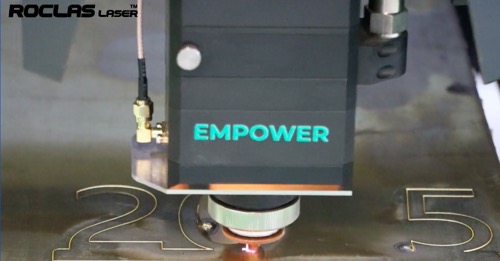
The core technical challenge in 3D laser cutting lies not merely in the laser source itself, but in the kinematic design of the motion system. A five-axis gantry configuration—often employing a fixed bridge with a movable worktable—provides the largest working envelope while maintaining dynamic stiffness. The cutting head, equipped with a three-dimensional swivel mechanism capable of n×360° infinite rotation, allows the laser beam to remain perpendicular to the workpiece surface regardless of its curvature. This is critical for maintaining consistent kerf width and avoiding angular distortion in cut edges.
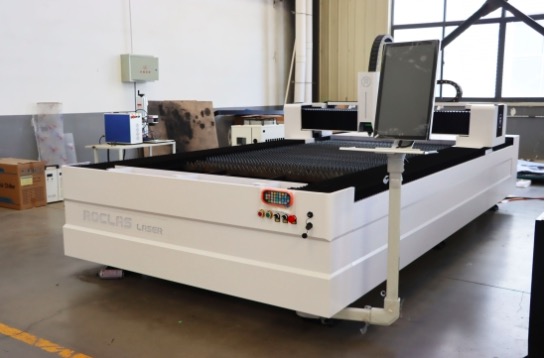
ROCLAS® MACHINERY CO., LTD. has established a strong reputation in this domain through its 5-Axis Fiber Laser Cutting Centers. The company’s design philosophy emphasizes structural rigidity: the machine bed and gantry are fabricated from heavy-duty steel, machined on CNC five-face machining centers to ensure dimensional accuracy over the entire travel range. Components from France Schneider, Japan SMC, and German igus are integrated throughout the system, contributing to reliability in continuous production environments. The use of imported servo drives and reducers enables rapid acceleration and deceleration without compromising positional repeatability, which is specified at ±0.02 mm for the X and Y axes.
In practice, these systems are deployed for applications such as cutting formed sheet metal enclosures for electrical cabinets, trimming stamped automotive components to net shape
Get a Quote
Regardless of whether you require general advice or specific support, we are happy to help you.
Recent Post
-
 The Ultimate Guide to High-Performance Fiber Laser Metal Cutting MachinesIntroductionFiber laser metal cutting machines have revolutionized the manufacturing industry with...2025-06-24 19:56:52
 -
 Understanding the Key Differences Between Fiber Laser and CO2 LaserIn the world of laser cutting and engraving, two types of lasers dominate the industry fiber laser...2025-03-30 09:31:59
 -
 The Ultimate Guide to Programmable Laser Cutters Revolutionizing Precision and EfficiencyIntroductionIn the realm of modern manufacturing and design, programmable laser cutters have emerg...2025-03-29 09:32:00
 -
 The Ultimate Guide to Steel Laser Cutting Techniques, Benefits, and ApplicationsIntroductionSteel laser cutting has revolutionized the manufacturing and fabrication industries, o...2025-03-24 08:31:07
 -
 Why Choose Roclas Fiber Laser Cutting for PED Components?IntroductionLaser cutting technology has revolutionized metal fabrication, offering unmatched prec...2025-06-16 07:49:19
 -
 The Evolution and Applications of Industrial Steel Cutters in Modern ManufacturingIntroductionIn the realm of modern manufacturing, the ability to precisely and efficiently cut thr...2025-03-26 07:31:53