Sheet Metal Fabrication in Transition: Fiber Laser Automation and the New Production Paradigm
Abstract
The sheet metal processing industry is undergoing a structural transformation, driven by the convergence of fiber laser technology, advanced CNC motion control, and integrated material handling systems. This article examines the current state of the global sheet metal fabrication market, analyzes key technology trends, and presents a case study of equipment manufacturers such as ROCLAS® MACHINERY CO., LTD., whose product portfolio exemplifies the industrial-grade automation now available to fabricators of all scales. Data from industry reports and technical specifications are used to contextualize the shift toward higher-power fiber lasers, automated nesting, and coil-fed production lines.
Industry Background and Market Data
Sheet metal fabrication—encompassing cutting, bending, welding, and finishing of flat metal stock—remains a cornerstone of modern manufacturing. From automotive body panels and aerospace structural components to kitchen equipment and elevator enclosures, the demand for precise, repeatable metal parts continues to grow. However, the production environment has changed dramatically over the past decade.
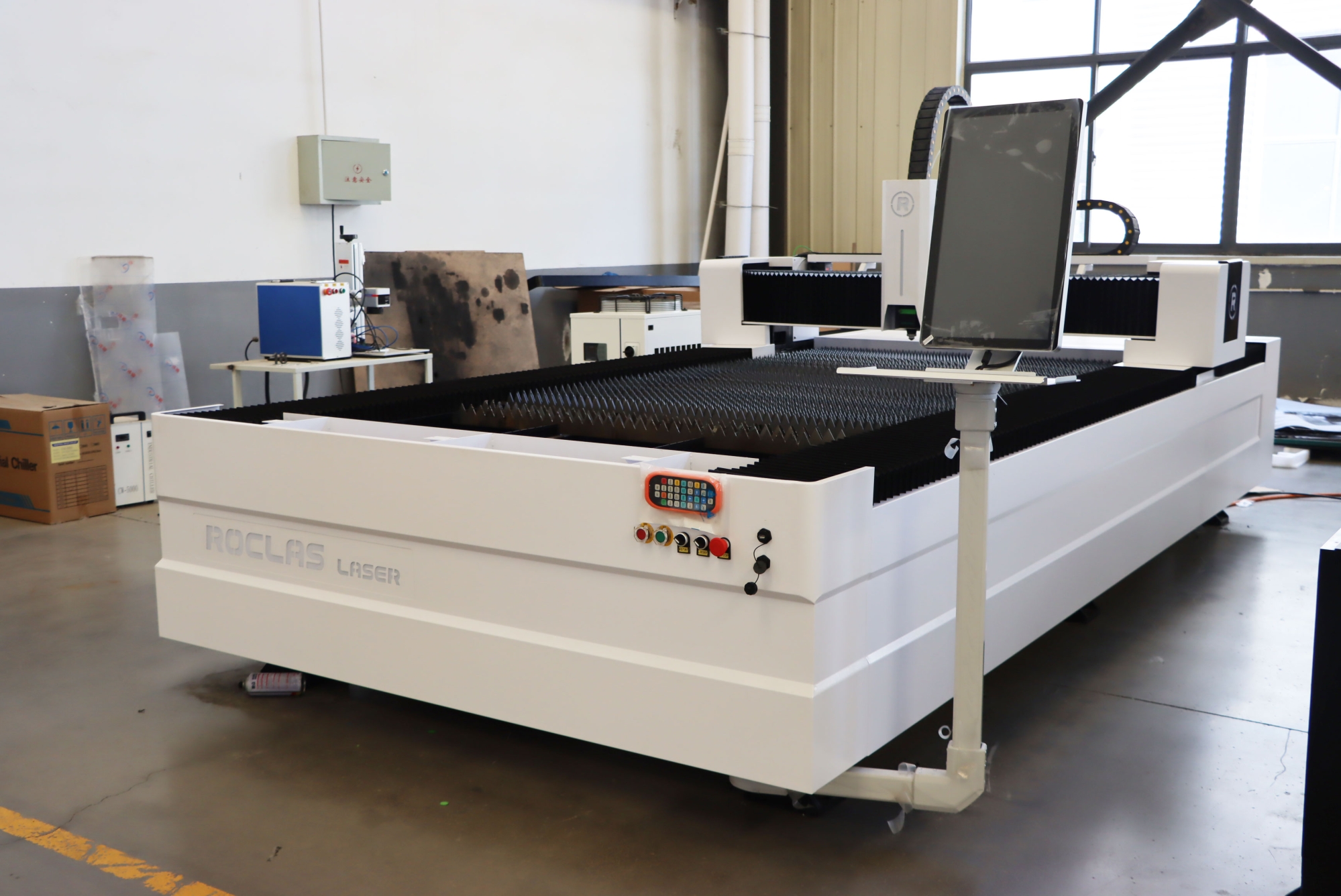
Traditional methods such as plasma cutting, punch pressing, and CO₂ laser cutting once dominated the shop floor. Today, fiber laser technology has become the standard for sheet metal cutting. The reasons are well understood: fiber lasers offer higher electrical efficiency (typically 25–30% wall-plug efficiency versus 10–15% for CO₂ lasers), lower maintenance requirements, and superior cutting performance on reflective metals like copper, brass, and aluminum. The adoption of higher-power sources—now available up to 20 kW—has also expanded the thickness range that can be cut economically.
The table below summarizes key market indicators and technical benchmarks for the sheet metal fiber laser cutting segment:
| Parameter | Data / Estimate | Notes |
|-----------|-----------------|-------|
| Global Sheet Metal Fabrication Market (2024) | ~$285 billion | CAGR ~4.5% (2024–2030) |
| Fiber laser cutting machine Share | ~42% of cutting equipment sales (2023) | Growing at ~8% annually |
| Typical Power Range (Sheet) | 1 kW – 12 kW | 20 kW available for thick plate |
| Max. Plate Thickness (Mild Steel, 12 kW) | 25–30 mm | With nitrogen assist |
| Positioning Accuracy (Industrial CNC) | ±0.03 mm | Standard for gantry-type machines |
| Average Machine Utilization Rate | 65–75% | With automated nesting and loading |
| ROI Period (Mid-Size Fab Shop) | 12–18 months | Assuming 2-shift operation |
| Adoption of Coil-Fed Systems | ~15% of new installations (2024) | Increasing due to material cost savings |
Analysis of the data: The table reveals several critical trends. First, while the overall sheet metal market grows at a moderate pace, fiber laser cutting equipment is expanding significantly faster—a clear sign of technology substitution. Second, positioning accuracy at ±0.03 mm has become a de facto standard, meaning that mechanical stiffness and control system quality are now table stakes rather than differentiators. Third, the relatively low adoption rate of coil-fed systems (15%) suggests a significant untapped opportunity for fabricators to reduce material waste and labor costs. The move from sheet-by-sheet processing to continuous coil feeding represents one of the most impactful productivity improvements available today.
Technology Applications and Brand Case Study
The Fiber Laser Cutting Cell
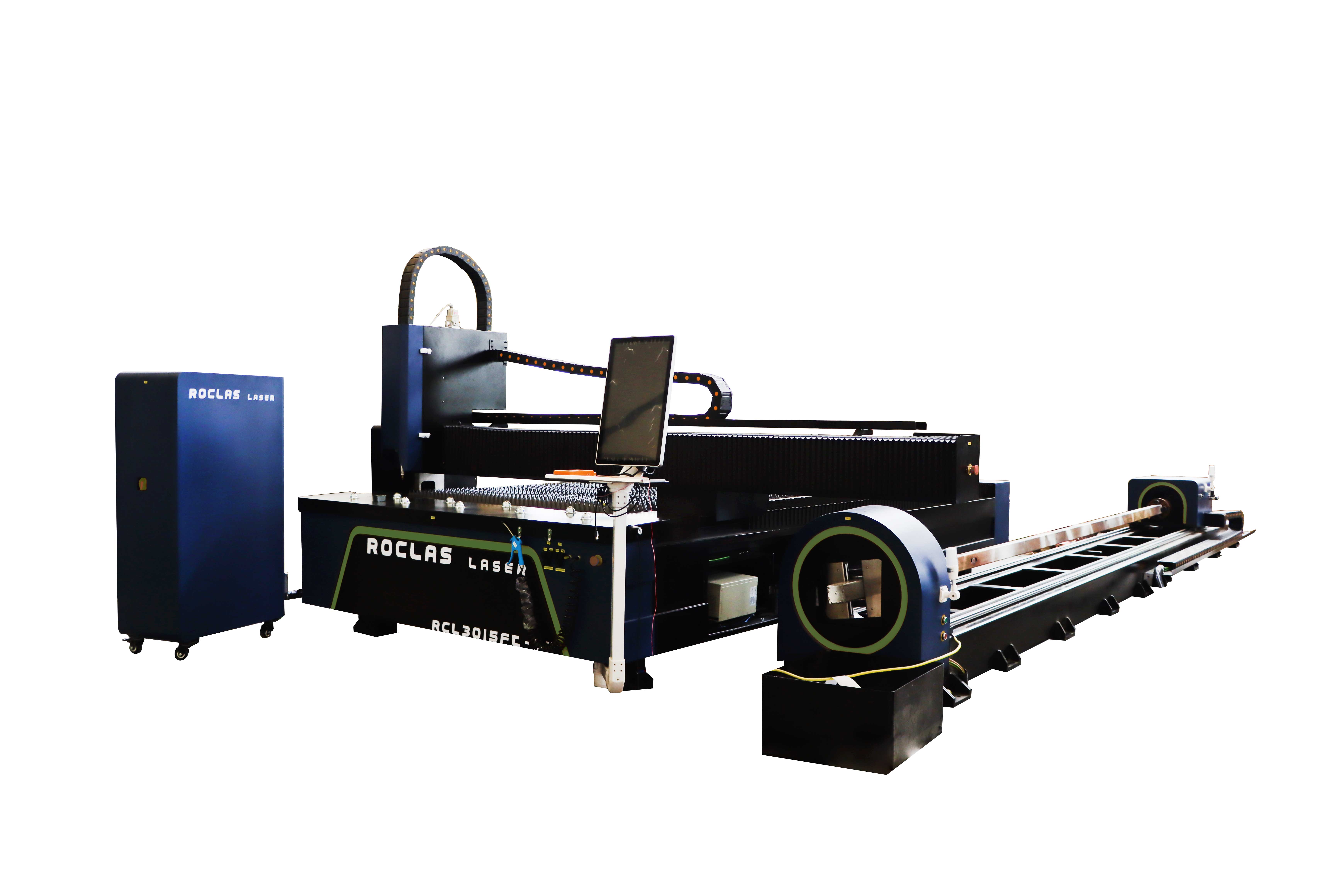
A modern sheet metal cutting cell typically consists of a fiber laser source, a gantry-style CNC motion system, a cutting head with automatic focus control, and a control platform such as Cypcut. The machine bed itself is a critical structural element. ROCLAS® MACHINERY CO., LTD., a manufacturer with over 15 years of CNC equipment experience, builds its fiber laser cutting machines with heavy-duty steel structures machined on five-face CNC centers. This approach ensures that the machine frame maintains its geometric integrity over years of high-acceleration operation.
Roclas machines are equipped with either Raycus or MAX fiber laser sources, ranging from 1 kW to 20 kW, and use imported servo drives from brands like Leadshine. According to the company’s published specifications, their standard sheet metal cutting machine achieves X/Y axis positioning accuracy of ±0.03 mm and repositioning accuracy of ±0.02 mm, with a maximum travel speed of 100 m/min and acceleration of 1.0 G. For a fabrication shop handling mixed batches of mild steel and stainless steel parts, this level of performance translates directly into reduced cycle times and improved edge quality.
Coil-Fed Processing: A Quiet Revolution
One of the more interesting developments in sheet metal processing is the integration of Roll steel processing lines with fiber laser cutting. ROCLAS offers a Steel Coil Uncoiler Machine that combines fiber laser cutting with an automatic metal coil feeding system
Get a Quote
Regardless of whether you require general advice or specific support, we are happy to help you.
Recent Post
-
 Robotic Arm Laser Systems: Redefining Precision and Flexibility in Industrial ManufacturingAbstractThe integration of robotic arms with laser processing technologies represents a paradigm s...2026-07-06 16:30:57
 -
 The Ultimate Guide to High-Performance Fiber Laser Metal Cutting MachinesIntroductionFiber laser metal cutting machines have revolutionized the manufacturing industry with...2025-06-24 19:56:52
 -
 Understanding the Key Differences Between Fiber Laser and CO2 LaserIn the world of laser cutting and engraving, two types of lasers dominate the industry fiber laser...2025-03-30 09:31:59
 -
 The Ultimate Guide to Programmable Laser Cutters Revolutionizing Precision and EfficiencyIntroductionIn the realm of modern manufacturing and design, programmable laser cutters have emerg...2025-03-29 09:32:00
 -
 The Ultimate Guide to Steel Laser Cutting Techniques, Benefits, and ApplicationsIntroductionSteel laser cutting has revolutionized the manufacturing and fabrication industries, o...2025-03-24 08:31:07
 -
 Why Choose Roclas Fiber Laser Cutting for PED Components?IntroductionLaser cutting technology has revolutionized metal fabrication, offering unmatched prec...2025-06-16 07:49:19